Skip to content

The field-readiness lab for Physical AI

Physical AI that works outside the demo and in the real world.

EmbodiedEdge tests, integrates, deploys, and supports robots and edge AI systems, so they hold up on real hardware, in real conditions, with the people who run them.

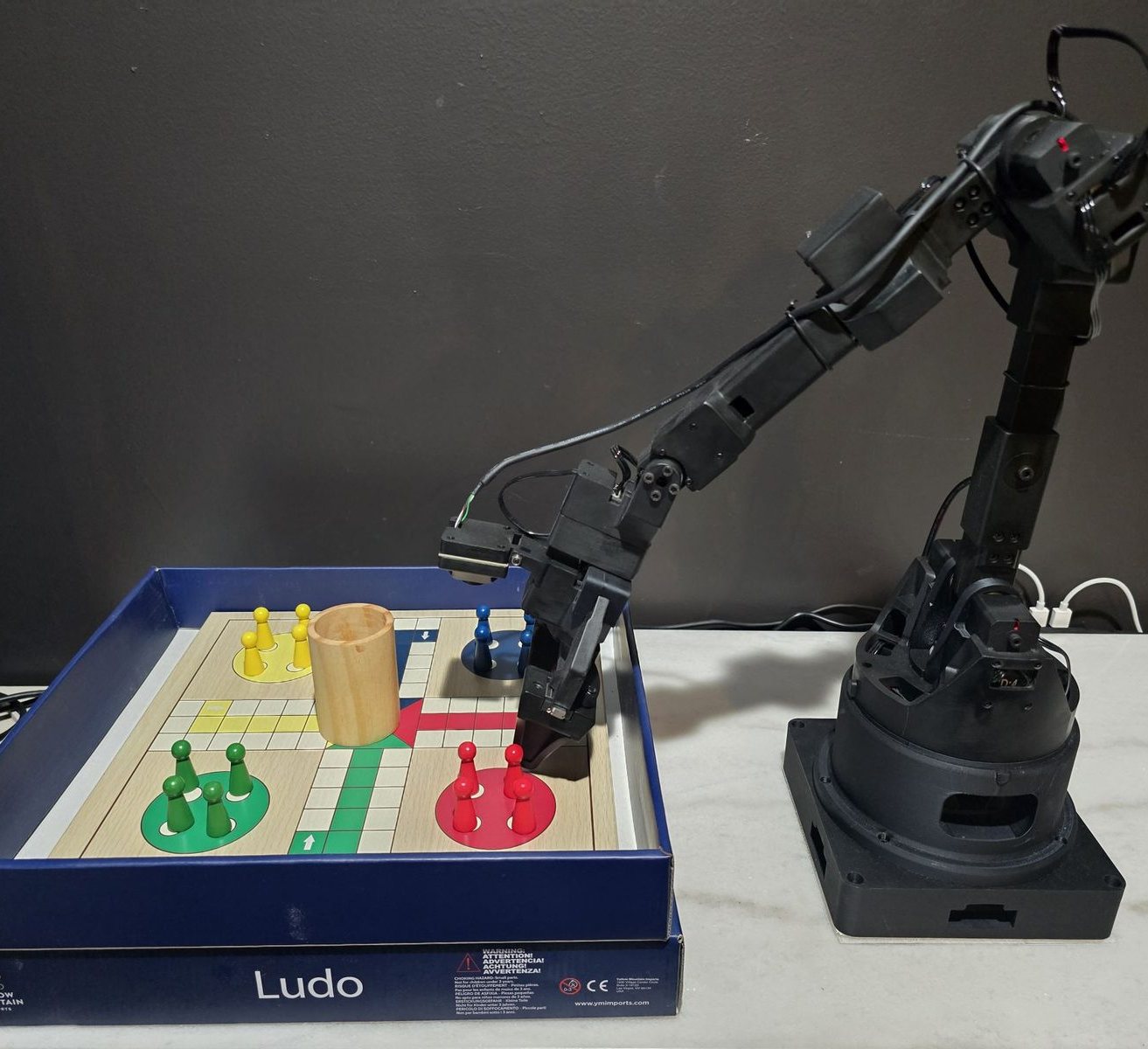
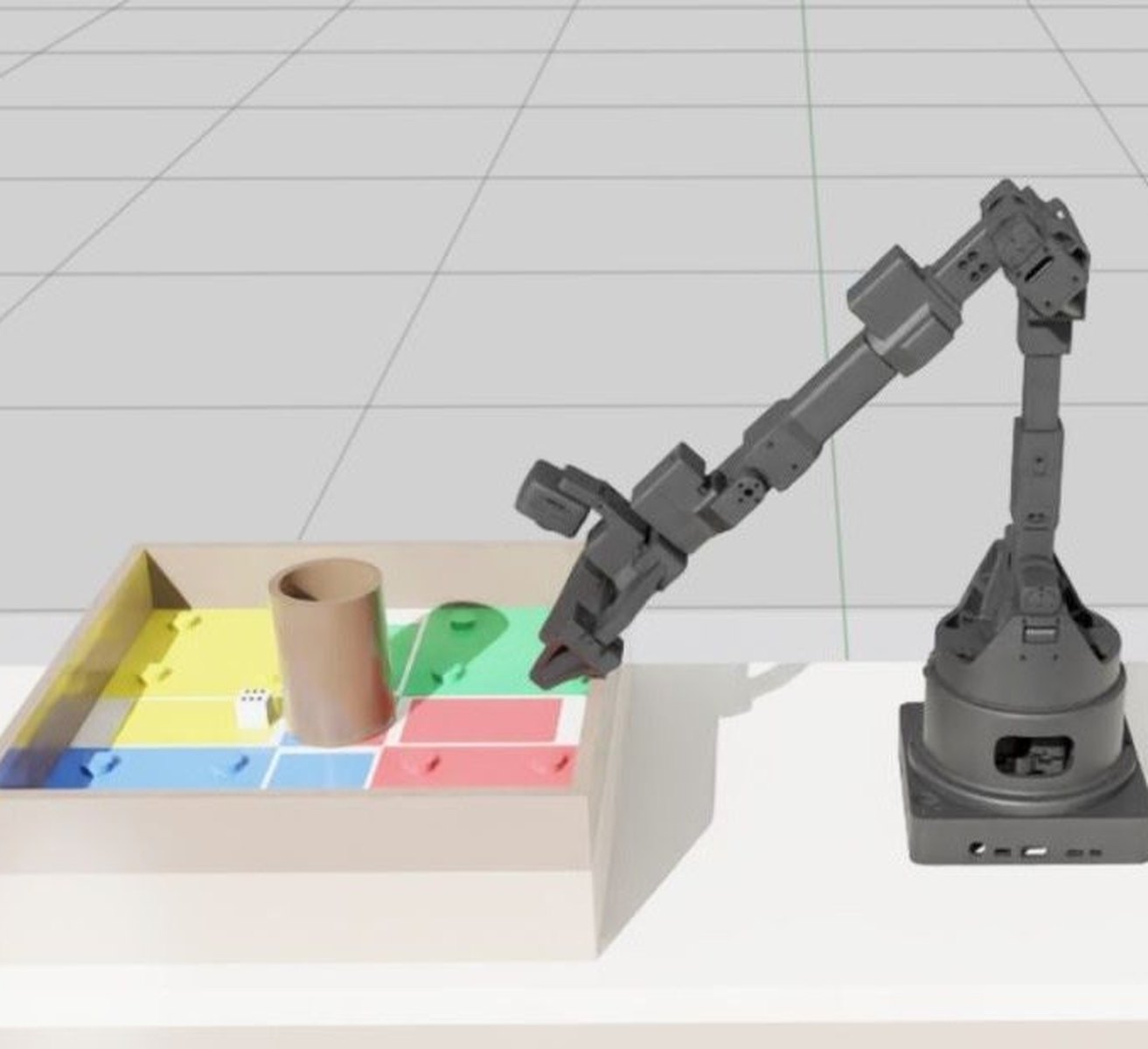
The lab's robot arm at the same Ludo board, in Isaac Sim and in the real world: real photoSimulation · Isaac SimReal world · Synria arm

Drag Same arm, same board. Left: the Isaac Sim digital twin. Right: the physical robot on the bench.

  • Founded onHardware integration at scale
  • BuildingPhysical AI and robotics systems
  • OperatingEdge deployment and observability

Applications

Where the work applies

Every Physical AI market hits the same wall: systems that work in the demo and struggle in the field. The lab works on that wall, across industries.

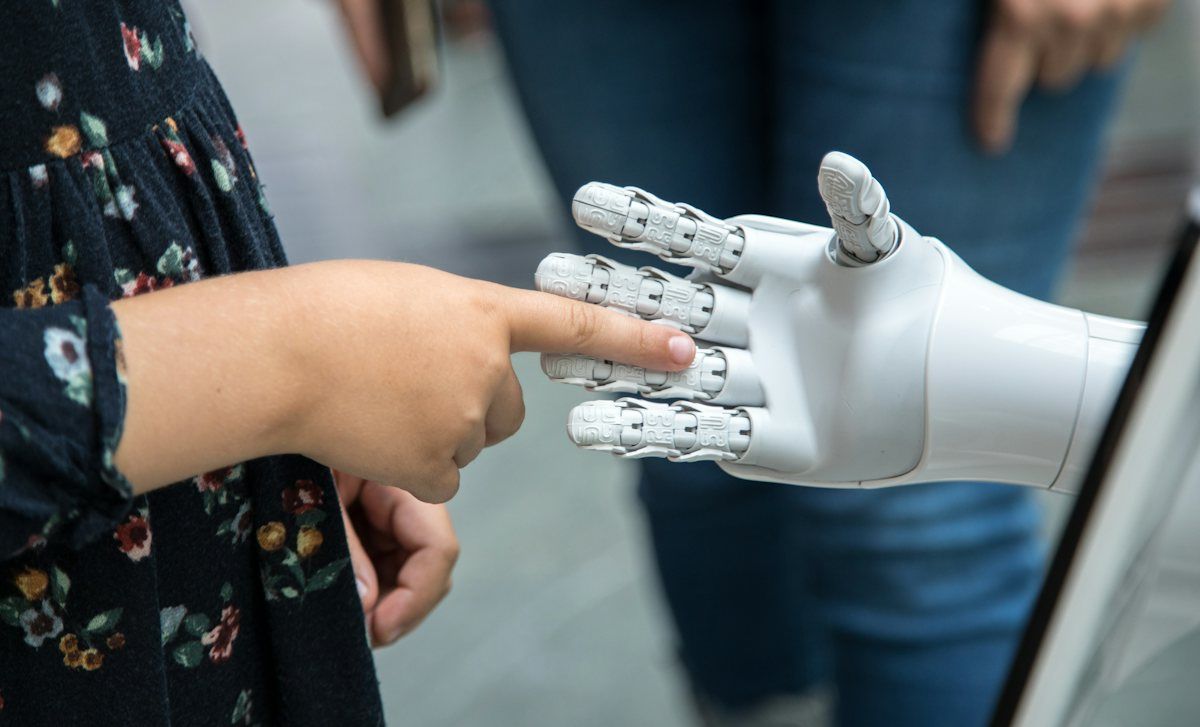
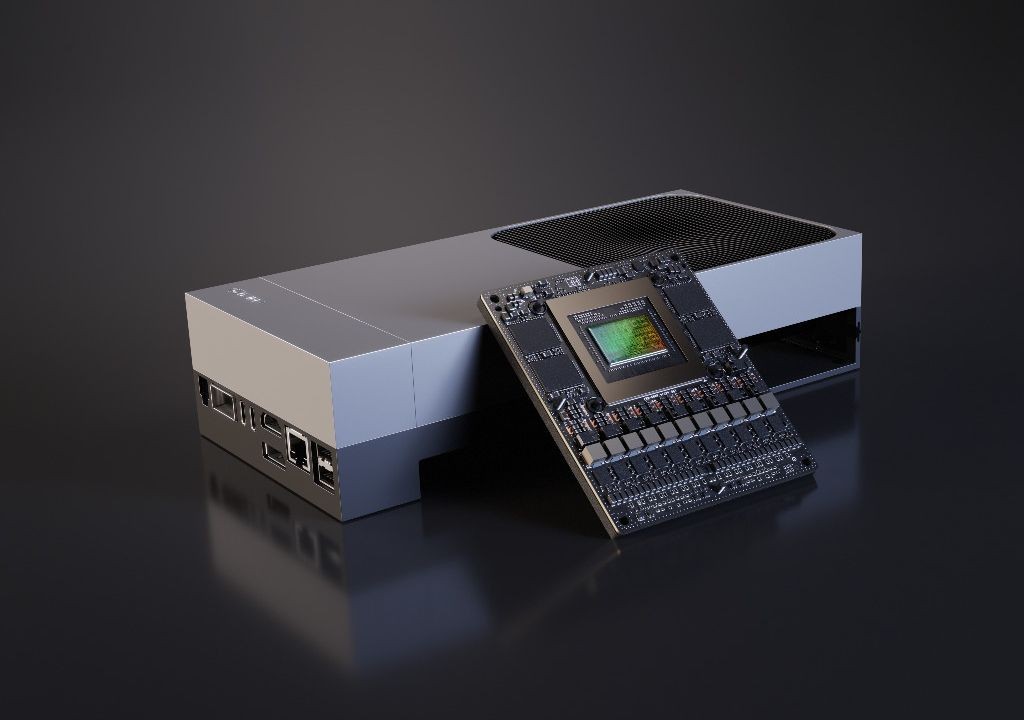
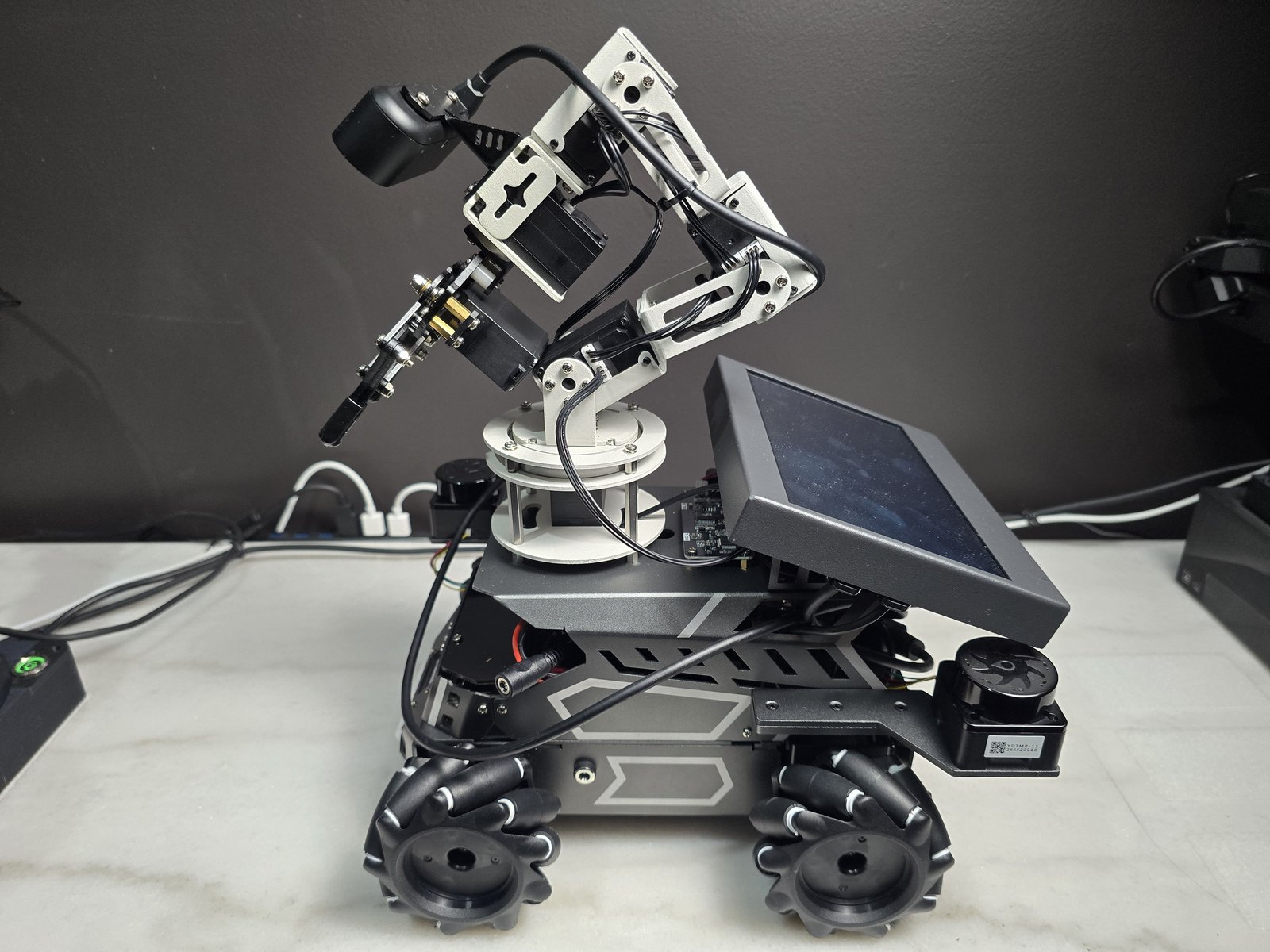
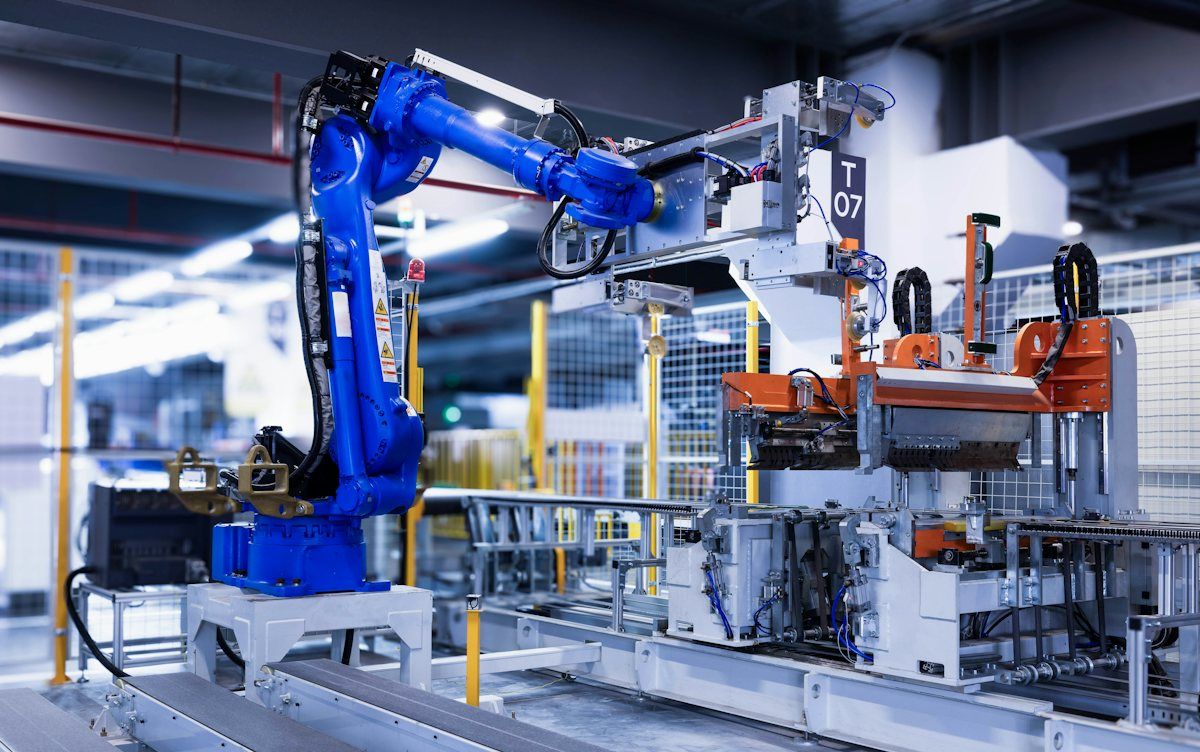
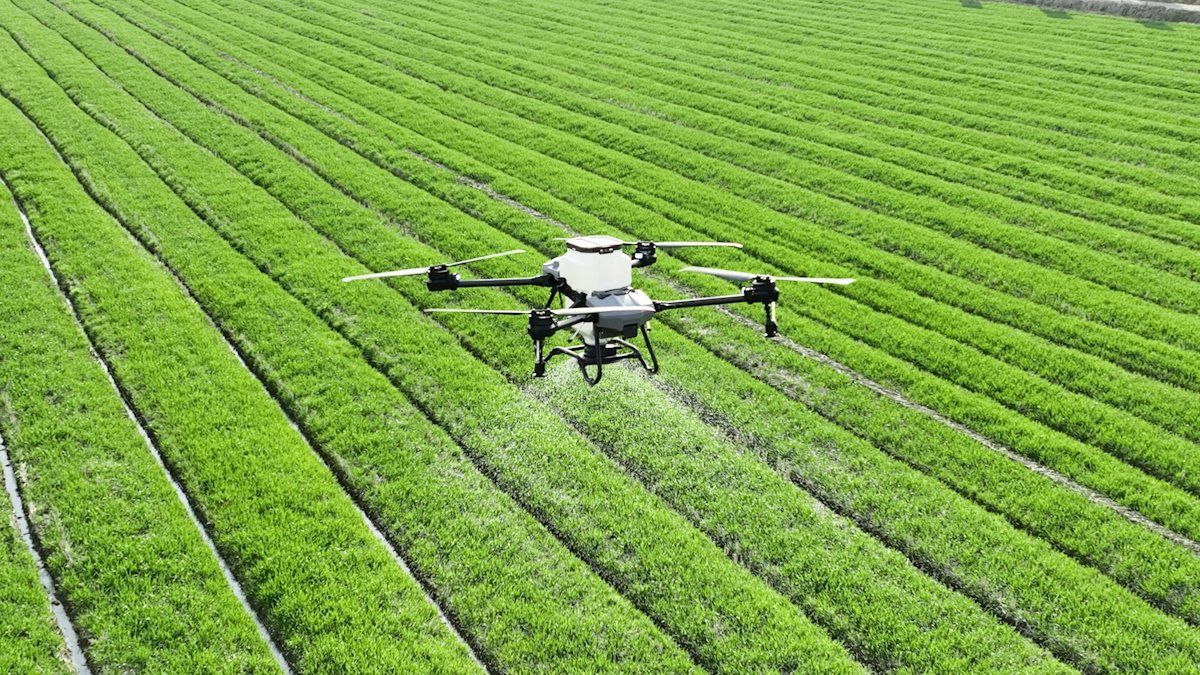
"Active" and "Starting" mark work running in the lab today. "Open to partners" marks capabilities we offer where no project is underway yet. Credited photos are licensed or manufacturer imagery, not EmbodiedEdge deployments. Uncredited photos are the lab's own hardware.

Capabilities

Strategy and execution, from first test to field operations

The plan and the hands-on work come from the same team, so nothing gets lost between the strategy, the lab, and the site. Each stage ends with something you can inspect.

  1. 01

    Test and validate

    Sim-to-real evaluation in digital twins, then benchmarking on the real hardware: latency, power, thermals, and failure modes.

    • Isaac Sim
    • OpenUSD
    • TensorRT
    • Power and thermal
    DeliverableMeasured evaluation report
  2. 02

    Integrate

    ROS 2 integration, perception and inference on Jetson, and sensor and actuator bring-up, instrumented from day one.

    • ROS 2
    • Jetson Thor / Orin
    • ONNX
    • Sensors
    DeliverableWorking, instrumented system
  3. 03

    Deploy

    Pilot planning and site rollout: hardware installed, commissioned, and handed over, with teams, vendors, and sites coordinated the way large programs are run.

    • Pilot plans
    • Rollout
    • Runtime safety
    • Telemetry
    DeliverablePilot running in the field
  4. 04

    Operate and maintain

    Monitoring, maintenance, and updates after launch, with human-bounded copilots that help operators act on what the telemetry shows.

    • Monitoring
    • Maintenance
    • Updates
    • Operator copilots
    DeliverableSupport and maintenance plan
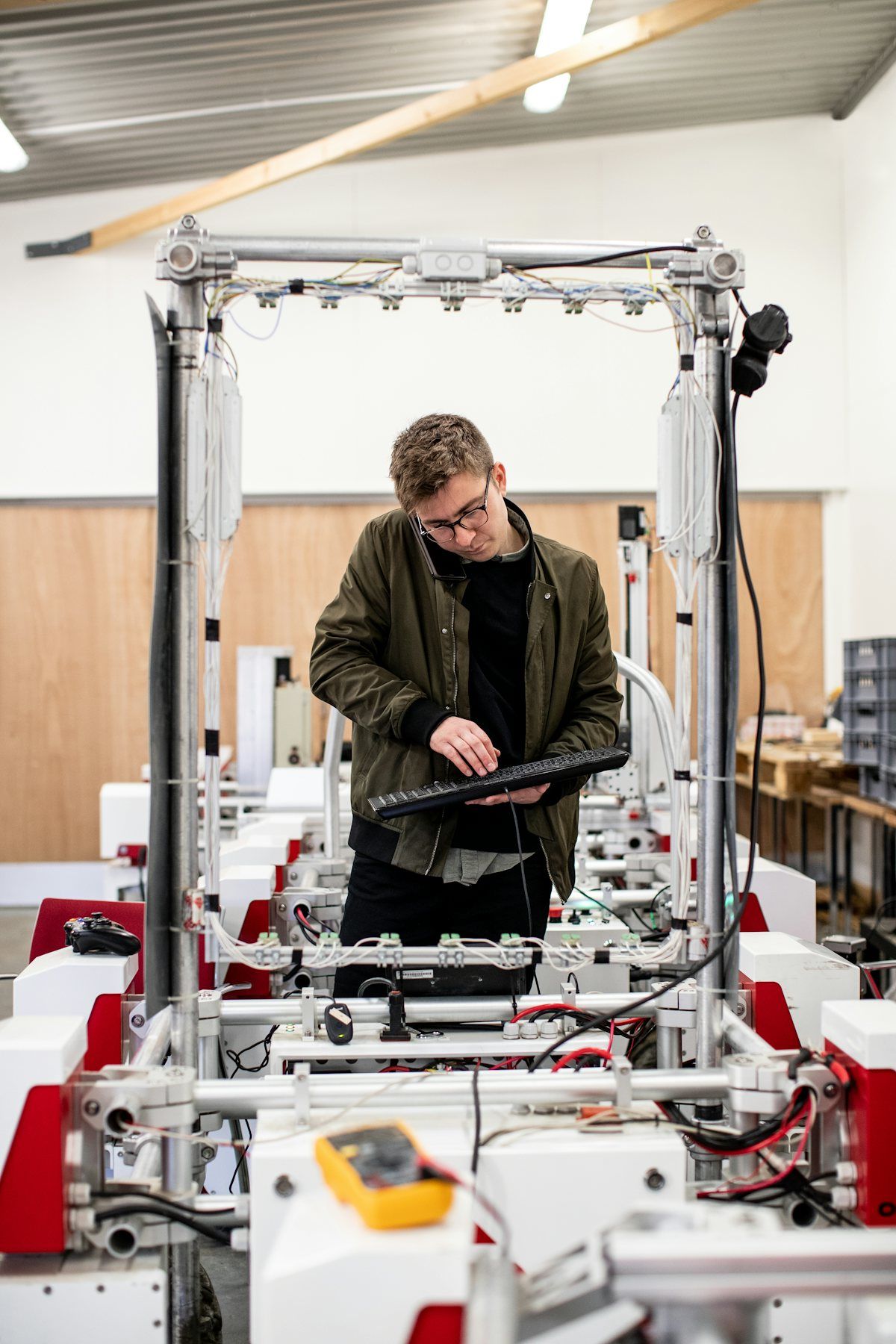
Deploy and operateThe work that keeps a system running after launch day. Photo: ThisisEngineering / Unsplash

Partner with us

Four ways to work with the lab

Leadership teams get a plan and the discipline to deliver it. Hardware makers get independent evidence. Researchers get a real test bench. Operators get a system that is ready for the field.

For leadership teams

Strategy and execution

A Physical AI roadmap your organization can actually run: what to build, buy, or partner on, which hardware qualifies, and how the first deployment gets planned, staffed, and delivered.

  • Readiness assessment of your stack, site, and team
  • Roadmap with pilot scope and success criteria
  • Vendor and hardware qualification
Start a conversation

For hardware brands and robot makers

Hardware evaluation

Send us a unit and we publish what we measure. Your edge board, sensor, arm, or robot gets integrated on a real Physical AI stack, run under real workloads, and evaluated independently.

  • Integration on a real Physical AI stack
  • Dated measurements: latency, power, thermals
  • Published report and technical content
  • Demos and content built on your hardware, with your name on it
Start a conversation

For labs, universities, and R&D teams

Co-development and research

Joint experiments, benchmarks, and papers on edge and Physical AI, with shared, reproducible artifacts.

  • Reproducible scenes, configs, and data
  • Benchmarks on shared hardware
  • Co-authored write-ups
Start a conversation

For operators and integrators

Pilot deployment

A scoped system taken from simulation to measured hardware, then into the field, with a clear plan for who runs it after launch.

  • Fixed scope and success criteria
  • Evidence at every stage
  • Deployment and support plan
Start a conversation

How we engage

  1. 01

    Scope

    We map the problem, the constraints, and what success looks like before anything is built.

  2. 02

    Prove it in the lab

    Simulation first, then measured runs on real hardware, so decisions rest on evidence.

  3. 03

    Deploy and support

    We take it into the field and stay through rollout, monitoring, and handoff.

Orange telemetry gradient

Current proof points

Built to be inspected.

  • AGX Thor101.6 ms TRT · 9.8 Hz2026-08-20
  • Thermals42.0 °C peakAGX Thor · 2026-08-20
  • Isaac Sim35/36 sim turns · 19.2 mm p50RTX 5090 · 2026-08-20
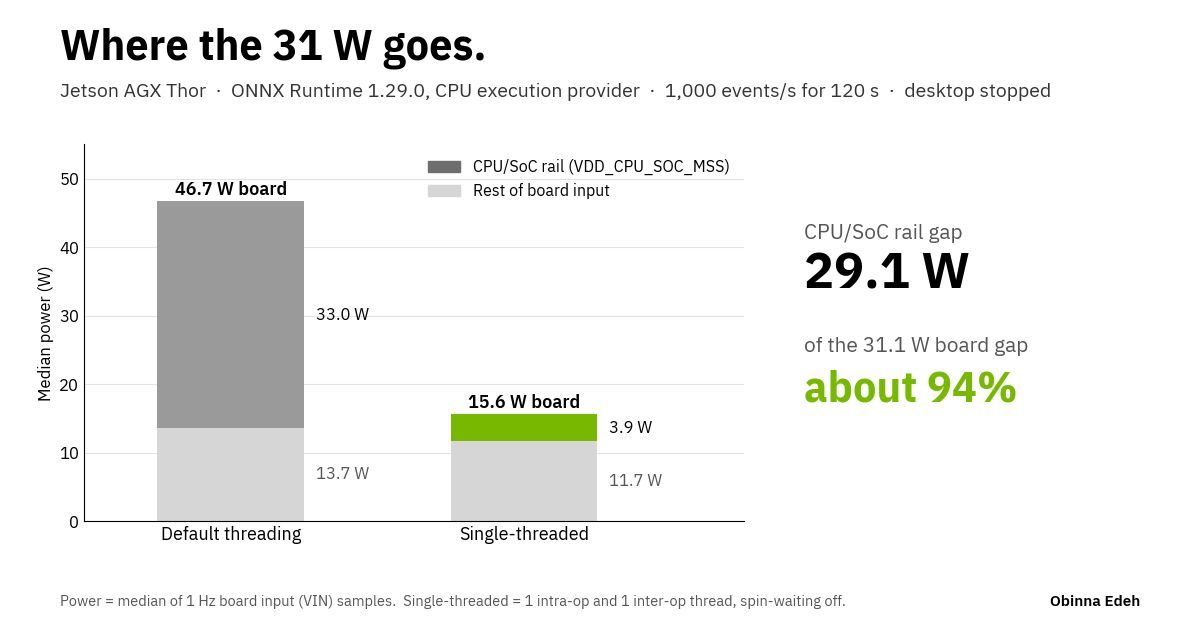
  • Edge IDS0.0237 ms p95 · 54.1 W → 24.3 WAGX Thor · 2026-09-08

From the Edge IDS power study · Jetson AGX Thor · ONNX Runtime

Read the study
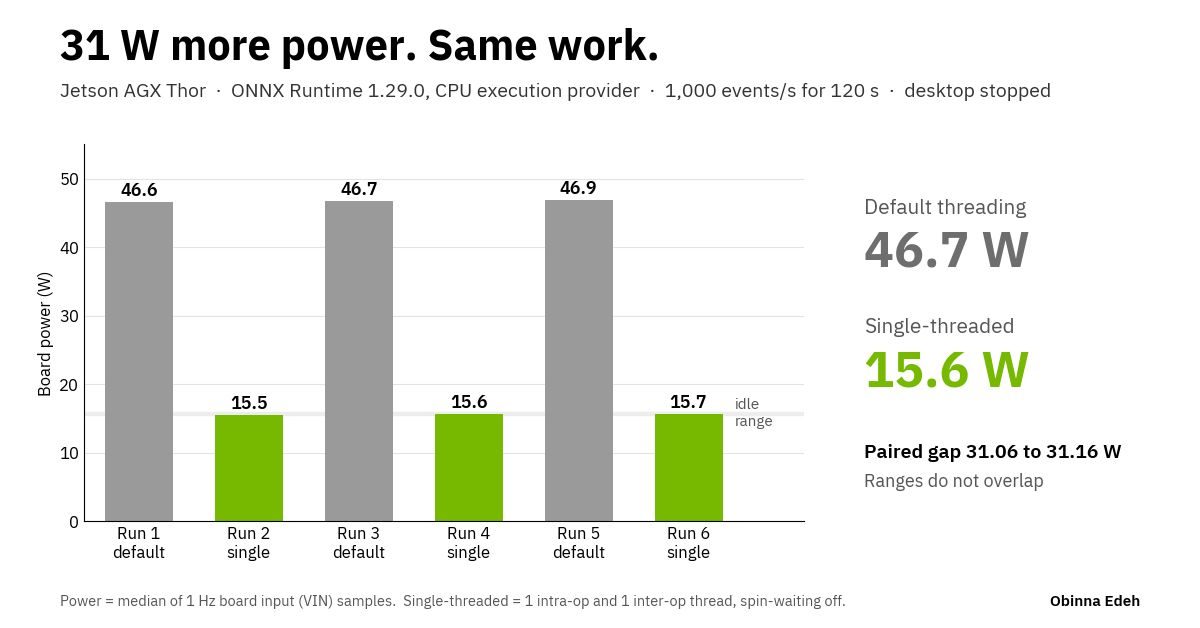
Chart: 31 W more power. Same work.
31 W more power. Same work.
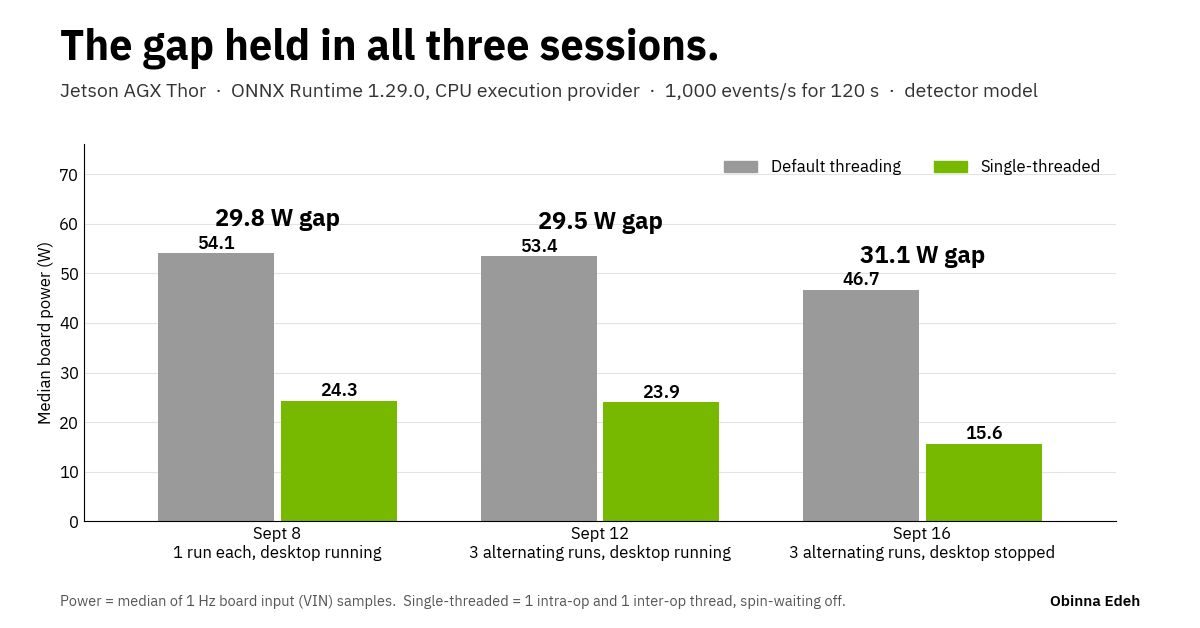
Chart: The gap held in all three sessions.
The gap held in all three sessions.
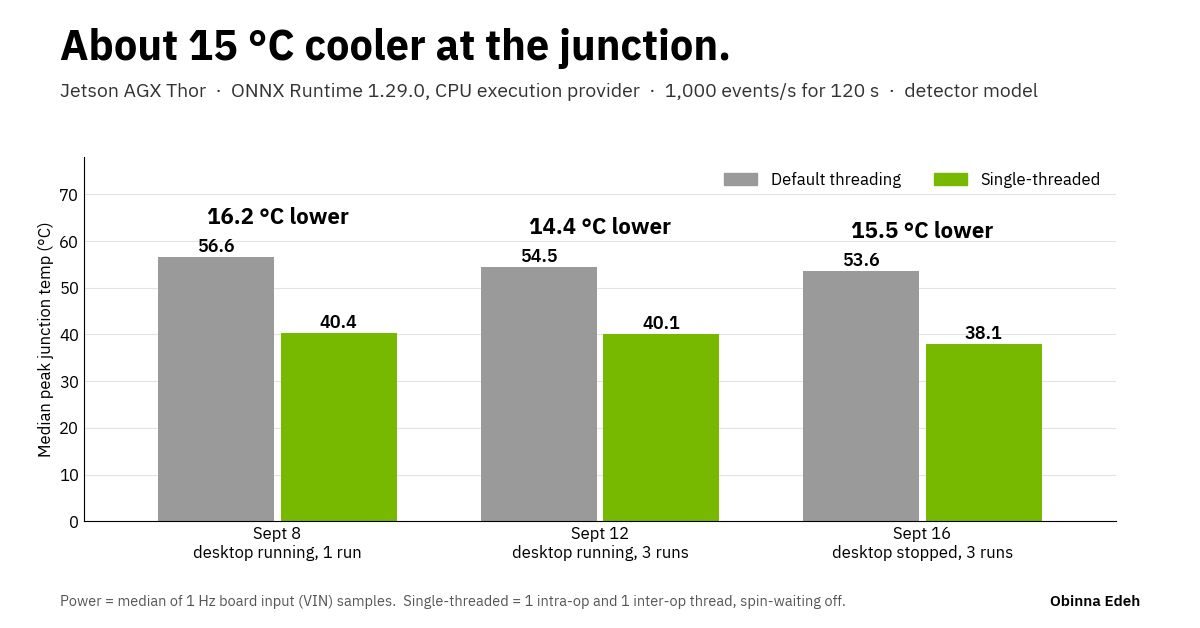
Chart: About 15 °C cooler at the junction.
About 15 °C cooler at the junction.
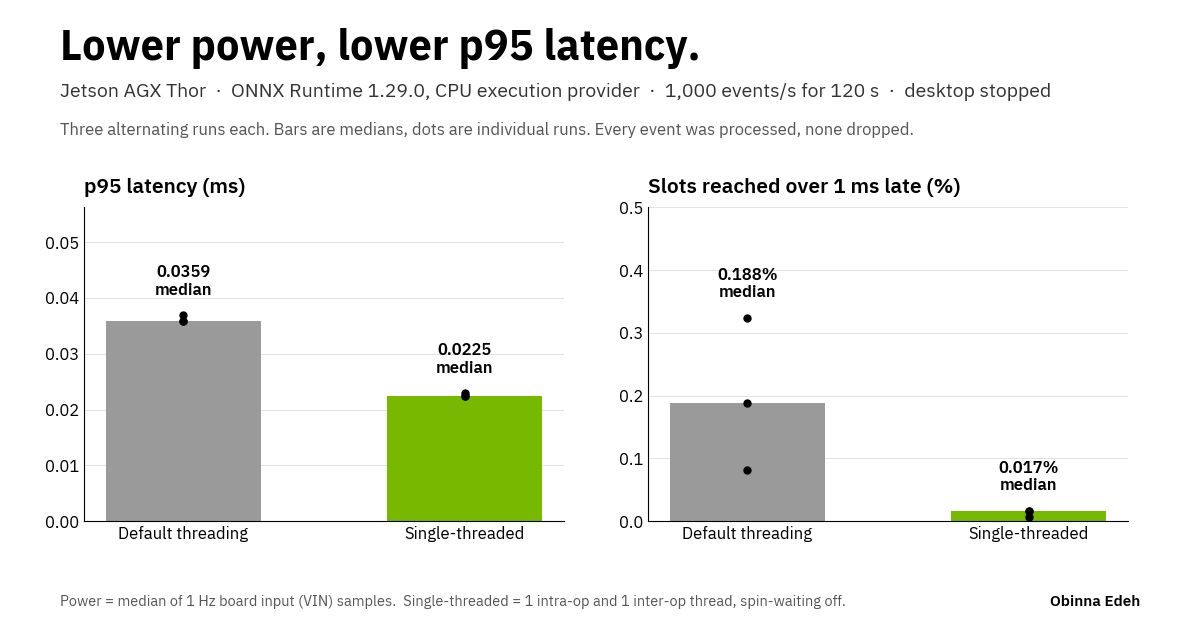
Chart: Lower power, lower p95 latency.
Lower power, lower p95 latency.
Chart: Where the 31 W goes.
Where the 31 W goes.
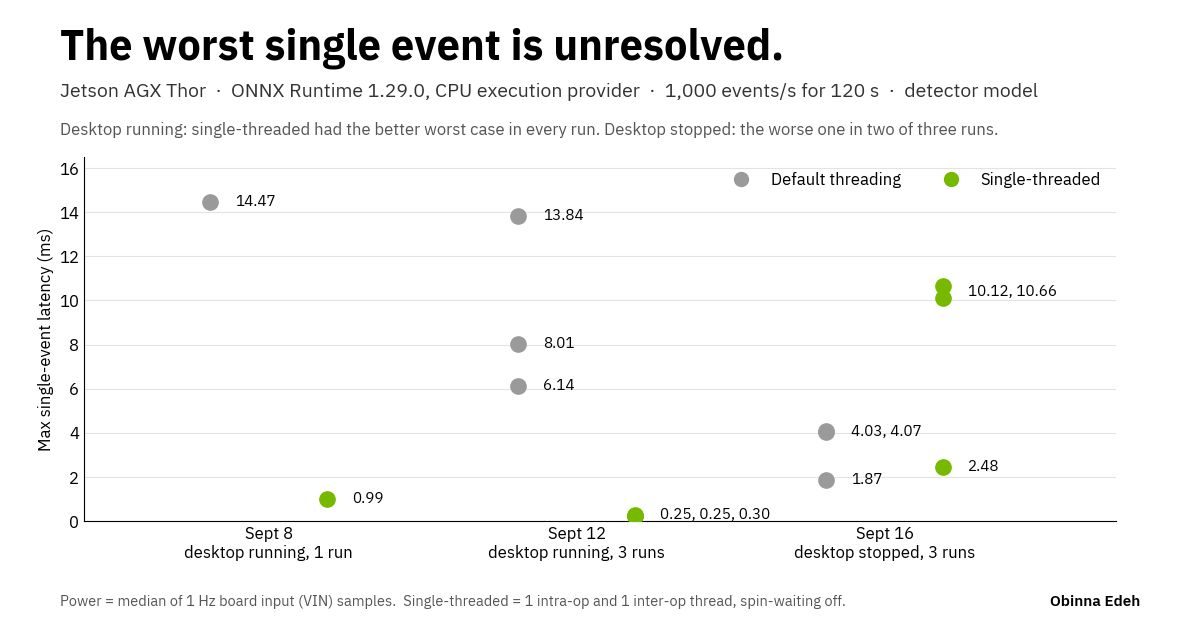
Chart: The worst single event is unresolved.
The worst single event is unresolved.

Mission

Make Physical AI dependable enough to deploy.

AI systems should not just run once in a demo. They should be measurable, observable, reliable, and useful under real constraints.

Goal

Close the sim-to-real gap, one measured system at a time.

Most Physical AI stalls between a working simulation and a system someone can run. The cause is rarely the model. It is integration, measurement, and the discipline to operate a system after launch day. That gap is the work.

  1. 01

    Measured, not assumed

    Results come with a date, a device, and a number, or the site says plainly that they have not been measured yet.

  2. 02

    Observable by default

    Telemetry is designed in from the first build, so a system can show when it is drifting before it fails.

  3. 03

    Human-bounded

    Agents and models advise. An operator reviews, decides, and stays accountable.

  4. 04

    Reproducible artifacts

    Scenes, configs, and measurements are versioned so any result can be run again.

Active systems

  1. Simulation
  2. Perception
  3. Edge
  4. Telemetry
  5. Control
Photo of the lab: an NVIDIA workstation, a rover and a robot arm on the bench

The lab

The lab runs on its own hardware.

  • NVIDIA Jetson AGX ThorPrimary edge target
  • NVIDIA Jetson Orin NXOnboard compute, mobile robot
  • Synria Alicia-D armManipulation
  • Yahboom ROSMASTER M3 ProMobile navigation
  • RTX 5090 workstationSimulation and training
Portrait of Obinna Edeh

Behind the lab

Obinna Edeh

Obinna's career has been hardware integration: installing, commissioning, and troubleshooting physical systems and keeping them running on site, including leading a nationwide deployment. That work taught him that the hard part of any system is rarely the design. It is getting the hardware to work where it lives and keeping it working. EmbodiedEdge applies that discipline to robots and edge AI.

Partners bring the hardware to EmbodiedEdge. It gets integrated, measured on a real Physical AI stack, and the results are published either way.

Contact

Let's build something that can leave the lab.

Strategy engagements, hardware evaluations, research collaborations, and pilot deployments. Tell us what you are building and where it needs to run.