Skip to content
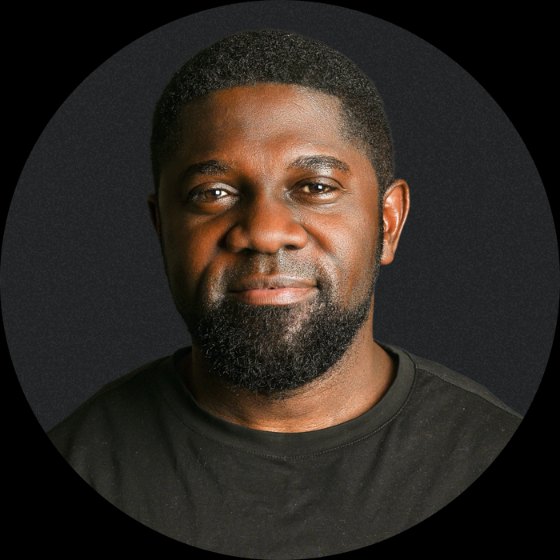
Portrait of Obinna Edeh

About the lab

Obinna Edeh

My work has always been hardware integration: getting physical systems installed, commissioned, and working in the real world. That included leading a nationwide deployment, running engineering teams, and coordinating field crews and vendors across multiple markets, where a plan only counted once the hardware was working on site.

That work taught me that the hard part is rarely the design. It is the integration, the measurement, and the discipline to operate a system after launch day.

Physical AI has the same problem. Models that look finished in simulation meet sensor noise, thermal limits, latency budgets, and operators who need to trust them. I started EmbodiedEdge to work on that gap in the open: on the lab's own robots and Jetson hardware, with measured results and an honest status on what works and what doesn't yet.

Blue to lime gradient

Mission

Make Physical AI dependable enough to deploy.

Goal

Close the sim-to-real gap, one measured system at a time.

How the lab works

Four rules behind every result

  1. 01

    Measured, not assumed

    Results come with a date, a device, and a number, or the site says plainly that they have not been measured yet.

  2. 02

    Observable by default

    Telemetry is designed in from the first build, so a system can show when it is drifting before it fails.

  3. 03

    Human-bounded

    Agents and models advise. An operator reviews, decides, and stays accountable.

  4. 04

    Reproducible artifacts

    Scenes, configs, and measurements are versioned so any result can be run again.

The bench

The lab runs on its own hardware

Every published number was measured on one of these.

  • NVIDIA Jetson AGX ThorPrimary edge target
  • NVIDIA Jetson Orin NXOnboard compute, mobile robot
  • Synria Alicia-D armManipulation
  • Yahboom ROSMASTER M3 ProMobile navigation
  • RTX 5090 workstationSimulation and training

Track record

Hardware integration at scale, applied to Physical AI

  1. In progress

    M.S. Applied Artificial Intelligence

    University of San Diego.

  2. 2018 to 2024

    Engineering Manager

    Led three engineering teams and directed 20 field crews and 10 vendors across three markets. Cut delivery cycle time by 25% through automation and analytics.

  3. 2016 to 2018

    First pre-5G CBRS wireless deployment in the U.S.

    Delivered the first pre-5G mobile and fixed wireless deployment on CBRS spectrum in the United States, cutting deployment time and operating cost by about half.

  4. 2011 to 2013

    Industrial automation and field systems integration, Electronic Service Solutions

    Integrated radio networks with the controllers that run field automation and the grid: RTUs and PLCs over DNP3 and Modbus for utilities across New York, New Jersey, and Pennsylvania, validated end to end. Led deployment of Motorola P25 trunked radio systems for utility field crews, and directed radar, UHF, and VHF network deployment for 15 major airports.

  5. 2008 to 2010

    Solutions architecture and deployment, Accenture

    Consultant architecting and deploying client systems end to end. Won and delivered a $2M program for the American Museum of Natural History: an indoor location and positioning system combining RFID, access points, controllers, and a location engine, taken from proof of concept through go-live. It launched as Wayfinder, became the museum's Explorer app, and still guides visitors today.

    See the Explorer app
  6. 2004 to 2007

    Enterprise network hardware deployment, Motorola

    Hands on the equipment from day one: migrated and provisioned more than 500 access points and controllers, built microwave point-to-point links, and configured mesh and WiMAX radios for multiple clients, resolving interference and stability problems on site.

  7. Origins

    Electrical and electronics engineering, then computer science

    Final-year Computer Science project at the University of Georgia: a parallel-parking robot built in embedded C on microcontrollers and infrared sensors. The hardware habit started there.

Foundations

What the lab works with

  • ROS 2
  • NVIDIA Jetson
  • Isaac Sim
  • OpenUSD
  • TensorRT
  • ONNX Runtime
  • Perception and localization
  • Edge inference
  • Telemetry and observability
  • Human-in-the-loop operations

Contact

Let's build something that can leave the lab.

The lab publishes what it measures. If you are working on the same gap, or want to dig into a result, the inbox is open.