Edge inference
ActiveBench2Field
Measures how much of a model optimization survives contact with the robot. The model alone met its deadline on the rover; the full frame did not.
Measured results
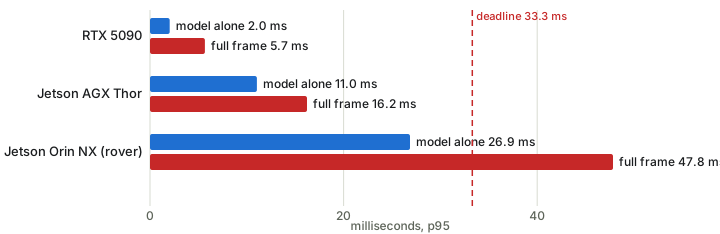
- Full frame on the rover47.8 ms p95Jetson Orin NX at 26 Hz, 33.3 ms deadline, 2026-10-02
- Model alone, same board26.9 msInside the deadline, so a model-only benchmark says GO
- Frames the pipeline sustains22.9 fpsAgainst a camera delivering about 26 Hz
- Board power at 26 Hz9.2 WOrin NX, against a 15 W budget
- SimulationBench boards: RTX 5090, AGX Thor
- PhysicalSame frames from the rover's camera
- Edge computeDecode, preprocess, infer, postprocess
- Edge computeWhole frame timed at the camera's real rate
- PhysicalDeadline verdict on the robot
Hardware
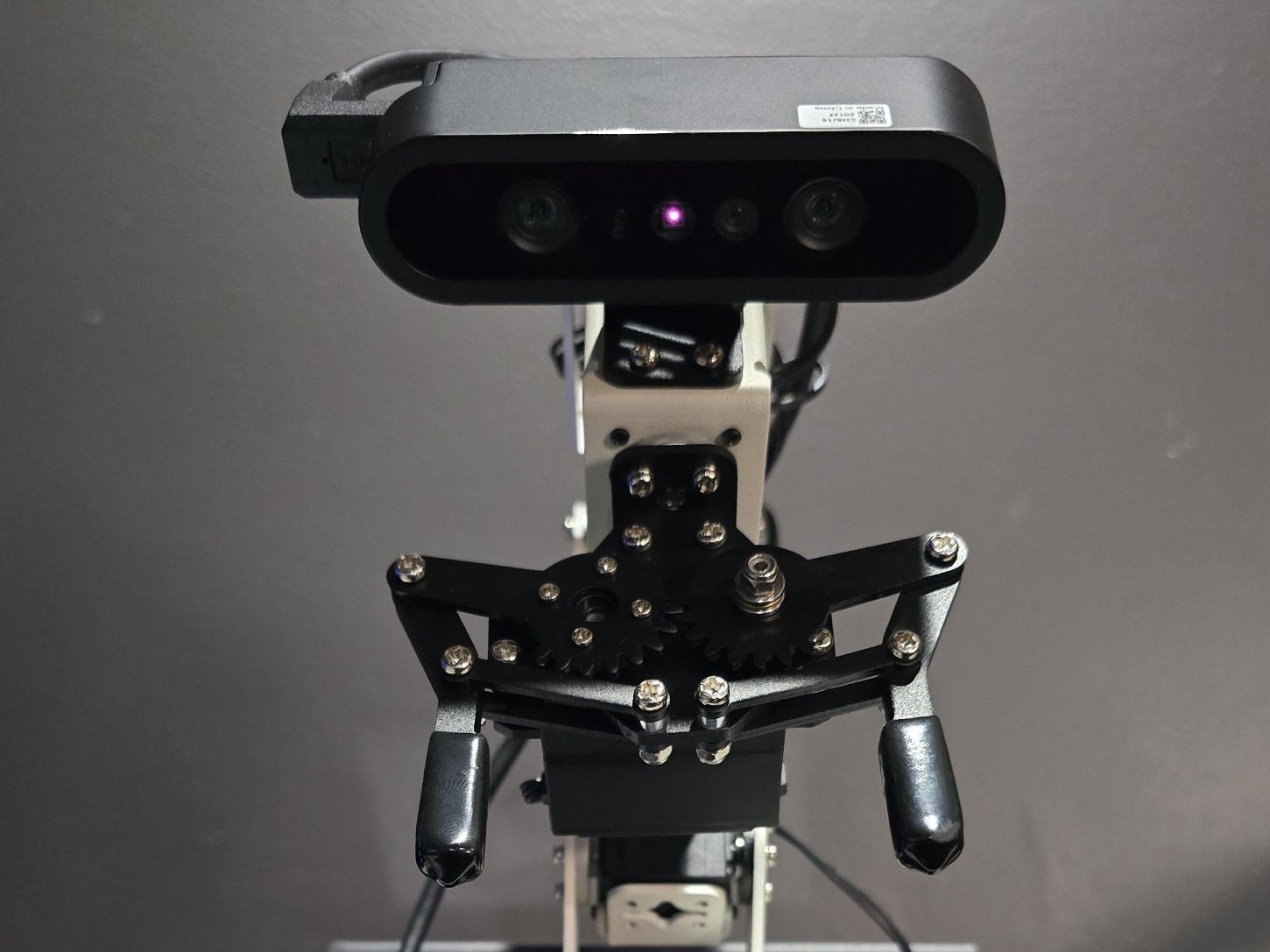
A Jetson Orin NX inside a ROSMASTER M3 Pro rover is the field board. A Jetson AGX Thor and an RTX 5090 are the bench boards. All three run the same frames and the same code, and report into one schema.
Workload
YOLOX-s, exported to FP32 ONNX and run through TensorRT, on frames from the rover’s own camera. The camera is configured for 30 fps, but with the rover’s stack running it delivered about 26 Hz, so 26 Hz is the rate the benchmark follows.
What was measured
The whole frame, not just the model: decode, preprocess, inference, postprocess and the copies in between, timed at the rate the camera really delivers, with board power and repeat-to-repeat spread.
What failed
On the rover, the model alone answered in 26.9 ms, inside the 33.3 ms deadline. The full frame took 47.8 ms at p95, so the robot would drop about one frame in eight. The same frames cleared the deadline on both bench boards.
What changed
Version 1.0.1 measured and diagnosed the gap. The first optimization step is now measured as well: at FP16 the same detector keeps its accuracy (mean AP 0.653 at IoU 0.5 on a 500-image COCO subset) and answers in half the time on both Jetson boards. INT8 gives up 1.5 AP points and is faster than FP16 only on the Orin NX. The rest of the plan, including the field-load replay that tests the full frame on the rover again, has not run yet. Later case studies use the same method on Alpamayo 1, DeepStream and Isaac ROS.
Result
A benchmark that times only the model would have shipped this detector. The bench-to-field difference is the finding, and every number traces to a committed run.
Evidence
The charts behind the results